FREE LOCAL DELIVERY Now Available! SHOP In-Store and Save! 408-227-7272 - DIRECTIONS


Your cart is currently empty
Product image slideshow Items

Available in store
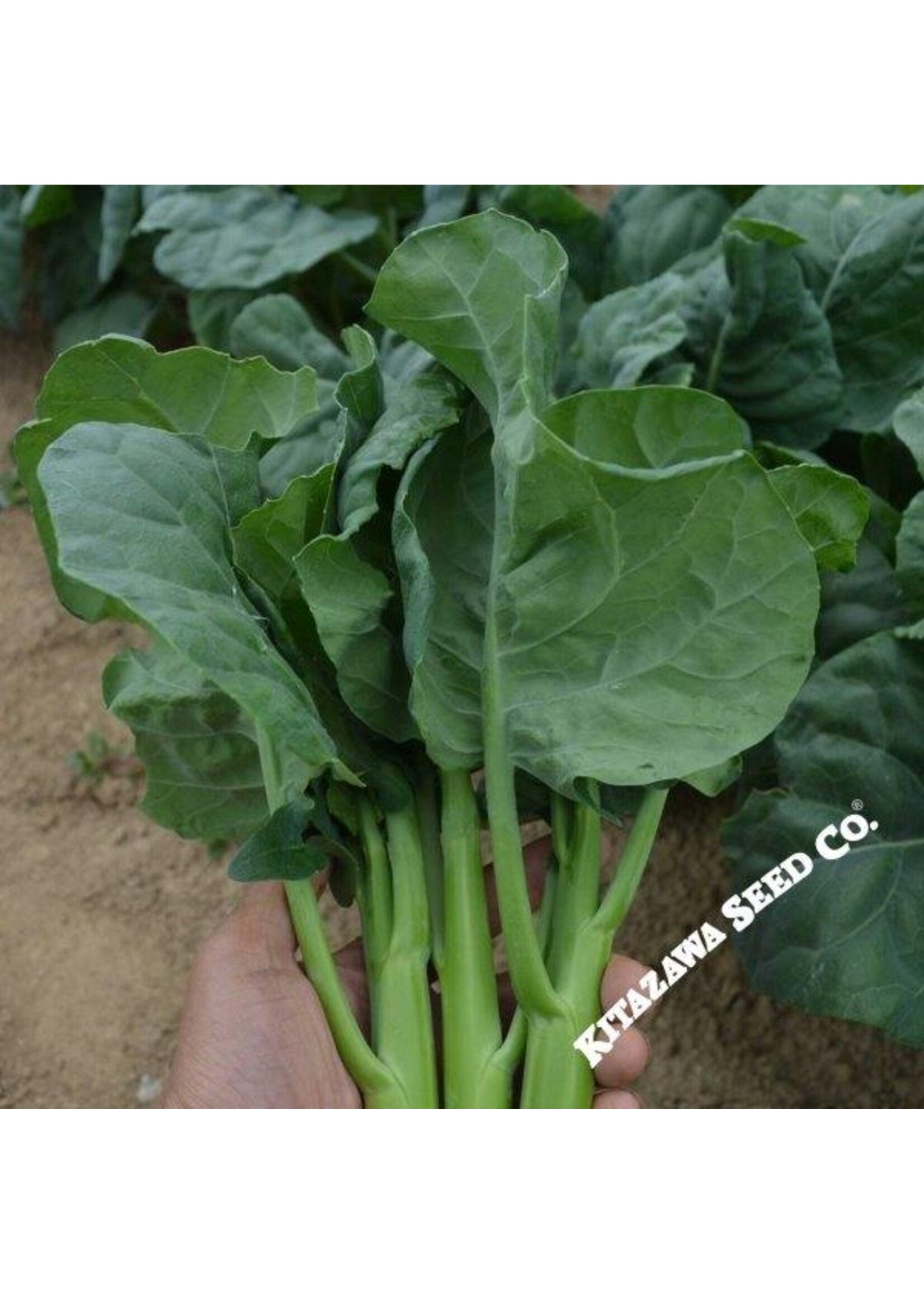
Close40-50 days to maturity. Brassica oleracea var alboglabra ‘Early Jade’. Early Jade Chinese Broccoli Seeds. Non-GMO, Hybrid, Cool-season Annual. Closely related to European cabbage, Chinese Broccoli was introduced to China in ancient times and quickly accepted into the local cuisine. The leaves are big and dark green with thick stems. Early Jade is slow bolting, and early maturing, with good uniformity. Suitable for growing at different times of the year. This variety is ideal for full-size and baby-size production. Approximately 9,000 seeds per oz.
Other Common Names: Chinese kale, white-flowering broccoli, gai lan, jie, kaai laan tsoi, kailan, or kairan.
Chinese broccoli can thrive when sown at a variety of times. Shield it against hard frosts. For heaviest yields, seed in the mid-summer for harvest in early summer or autumn. In temperate climates, early spring sowings and mid-summer harvests are also possible. Keep soil moist. Chinese broccoli grows in multiple climates. It is best to sow the seeds where they will grow for the season (in situ). Chinese broccoli does not do well with transplanting.
Space the seedlings depending upon what stage you plant to harvest them. When growing mature plants, leave ample room for growth. Fertilizing after each cut can help the plant to recover quicker and produce more. Chinese broccoli has shallow roots; frequent and light watering is best. In high winds, mound the soil around the stalks to increase stability.
Harvest the main stalk when 8-10" tall and when 2-3 flowers are about to open. After this cut, the plant branches freely for an extended harvest.
It is primarily the young, flowering stems, blooms, and accompanying leaves that are edible. The soft leaves and tender, crispy stems have an excellent flavor when steamed, in stir-fry dishes, or in soup. Peel off the outer skin if the stalk has become rough.
“In the west, we tend not to eat broccoli stalks. However, my favorite way to eat them is by taking off any tough skin and then shaving them into fine ‘noodles’ (with a peeler) and, after a quick blanch, tossing them in a ginger peanut sauce.”
