FREE LOCAL DELIVERY over $99! SHOP In-Store and Save! CALL or TEXT 408-227-7272 - DIRECTIONS


Your cart is currently empty
Product image slideshow Items
Available in store
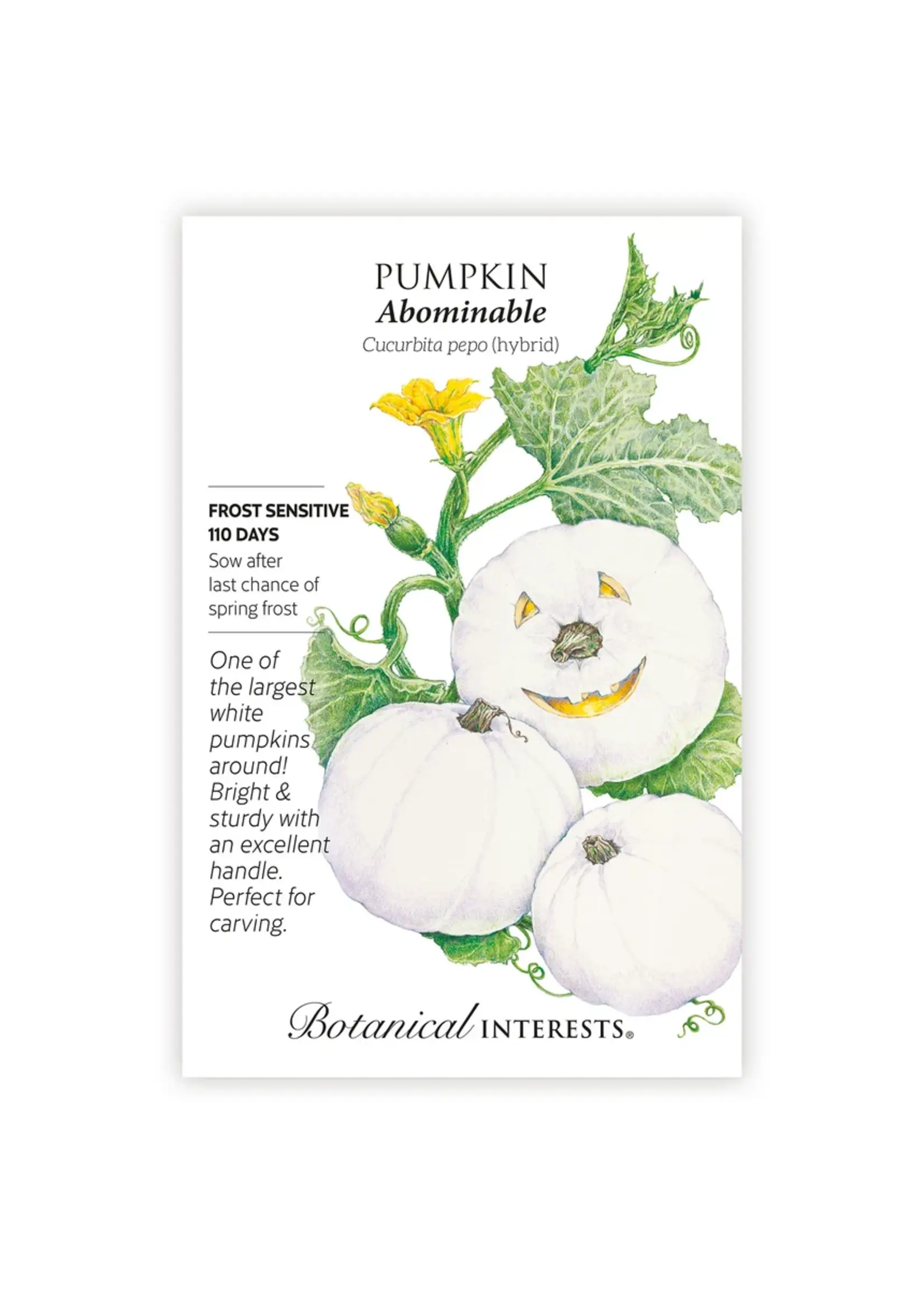
CloseThis striking pumpkin reaches 12–15 pounds and holds its clean white color long after harvest. Its strong, reliable handle makes carrying and decorating easy, while intermediate resistance to powdery mildew helps keep vines healthy. With its impressive size and smooth surface, 'Abominable' is a standout choice for porch displays, carving, or festive centerpieces.
| Coverage | This packet sows up to 3 mounds. |
|---|---|
| Row Spacing | 4'–6' apart |
| Seed Depth | 1" |
| Seed Spacing | 2 – 3 seeds per mound |
| Thinning | When several leaves, thin to 1 ‒ 2 per mound |
| Germination | 7 – 14 Days |
| Start Indoors | Not recommended except in very short growing seasons, 2 to 4 weeks before your average last frost date. Sow in biodegradable pots that can be planted directly in the ground. Transplant after your average last frost date, when weather is warm and settled. |
| Direct Sow | RECOMMENDED. 2 to 4 weeks after your average last frost date, and when soil temperature is 70°‒90°F. |
| Special Care | Black weed barrier fabric or plastic sheeting helps to warm the soil, keep down weeds, and retain moisture. Lay a sheet of the barrier fabric or black plastic sheeting over the soil in your planting area. Cut 4"–6" diameter holes in it, 4'–6' apart, and sow the seeds within the cut holes. The best way to irrigate when using this fabric or sheeting is with a soaker hose or drip irrigation underneath. Remove the fabric or sheeting at the end of the growing season. Pumpkins are monoecious (having both pollen-producing flowers, and flowers that are able to produce fruit only when pollinated). Pollen-producing flowers appear earlier in the season, in theory, to attract bees to the area. Sowing pollinator-attracting plants near pumpkins can assist in proper pollination, resulting in a bigger harvest and well-shaped fruit. Floating row covers are highly recommended for pumpkin plants during the early days of their lives to protect the young plants from squash vine borer and cucumber beetles. Hand-pick and destroy any squash bugs or cucumber beetles. Remove covers when plants begin flowering. Another method to avoid vine borers is to cover the base of the stems near the ground with mulch, foil, or fabric material, as the base of the stem is where insect eggs are laid. Pumpkin plants are also susceptible to fungal disease, so make sure plants have ample space for air circulation. To form a flat bottom on your pumpkin, gently set it upright if it emerges growing on its side. Keep pumpkin patch well-weeded. |
| Growing & Harvesting | Harvest pumpkins before the first fall frost, and when foliage has begun to dry out. Cut stem with a knife, leaving 3"–4" of stem on the pumpkin. Do not hold the pumpkin by the stem; if stem attachment gets broken, or any part of the pumpkin bruises, the pumpkin may rot. Brush off any dirt or leaves. Ideally, cure at 80°–85°F and 80‒85% humidity or a warm, sunny spot with good air circulation for 1 to 2 weeks before eating or storage. Do not allow harvested fruit to get wet. |
