FREE LOCAL DELIVERY over $99! SHOP In-Store and Save! CALL or TEXT 408-227-7272 - DIRECTIONS


Your cart is currently empty
Product image slideshow Items
Available in store
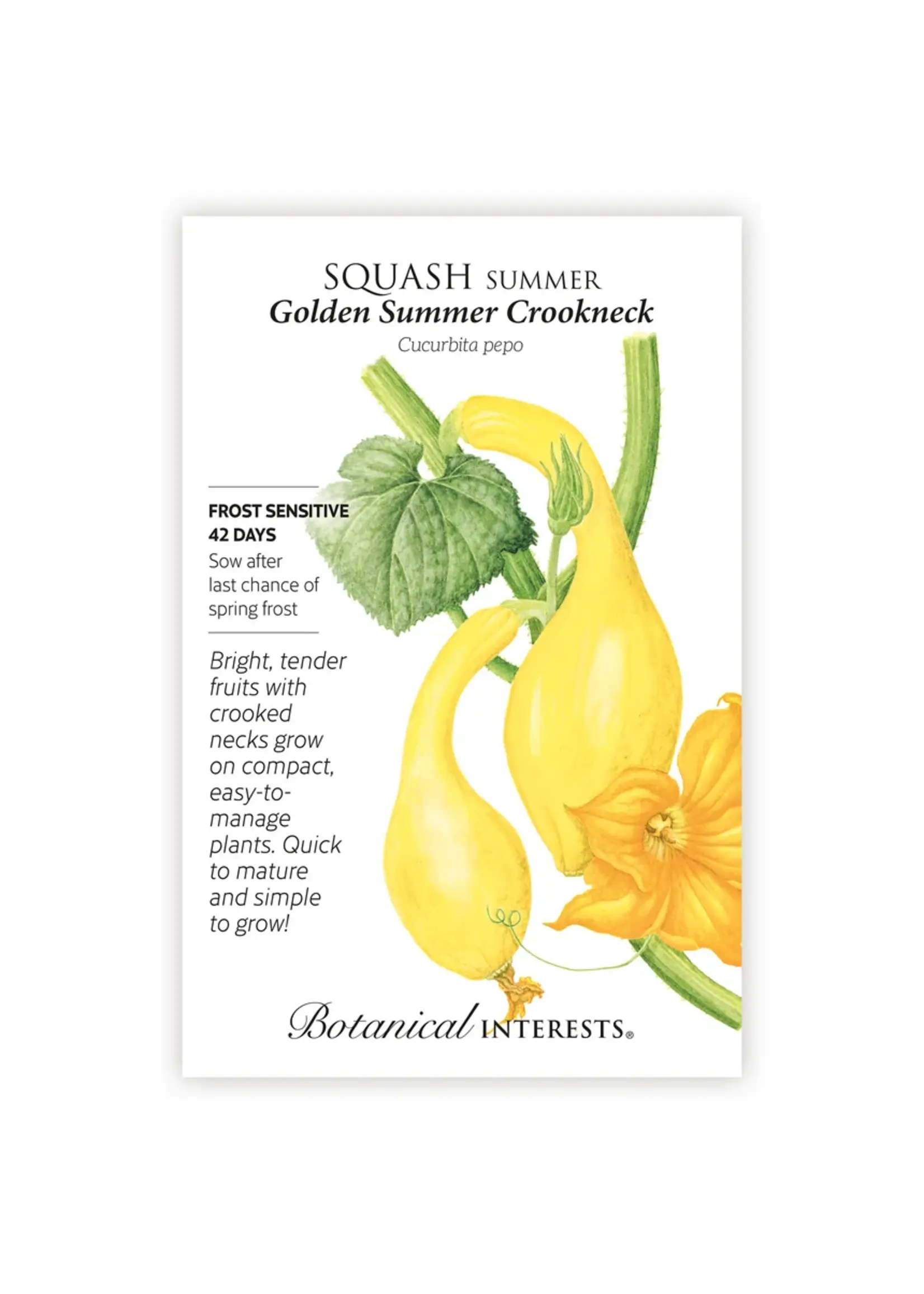
CloseGolden Summer Crookneck produces bright, tender fruits best harvested at 6–8 inches long. The squash grows on short 2-foot vines that form a bushy plant 2–4 feet wide, making it easy to manage in any garden. Vigorous and productive, this classic summer squash delivers abundant, flavorful fruits throughout the season, perfect for roasting, steaming, or enjoying fresh from your garden.
| Coverage | This packet sows up to 6 mounds. |
|---|---|
| Row Spacing | 3' – 4' |
| Seed Depth | 1/2" – 1" |
| Seed Spacing | 2 – 3 seeds per mound |
| Thinning | When 3 leaves, thin to 1 plant per mound |
| Germination | 5 – 10 Days |
| Start Indoors | Not recommended except in very short growing seasons, 2 to 4 weeks before transplanting. Roots are sensitive to disturbance; sow in biodegradable pots that can be planted directly into the ground. Transplant when soil temperature is at least 60°F. |
| Direct Sow | RECOMMENDED. 1 to 2 weeks after your average last frost date, and when soil temperature is 70°‒85°F. |
| Special Care | Floating row covers can help protect from squash vine borer and cucumber beetles. Remove covers when plants begin flowering. Another method to exclude vine borers is to cover the base of the stems near the ground with mulch, foil, or fabric material, as the base of the stem is where insect eggs are laid. Squash plants are susceptible to fungal disease, so make sure plants have ample space for air circulation. Sowing pollinator-attracting plants near squash can assist in proper pollination, resulting in a bigger harvest and well-shaped fruit. |
| Growing & Harvesting | Harvest frequently to increase yield; squash seem to get monstrous overnight. While edible at almost any size, seeds are less developed in young fruit, therefore more tender. Using a knife or clippers, cut squash off including some of the stem. By including stem, the fruit is sealed and less likely to mold or dry out. |
