FREE LOCAL DELIVERY over $99! SHOP In-Store and Save! 408-227-7272 - DIRECTIONS


Your cart is currently empty
Product image slideshow Items
Available in store
CloseCitrullus lanatus
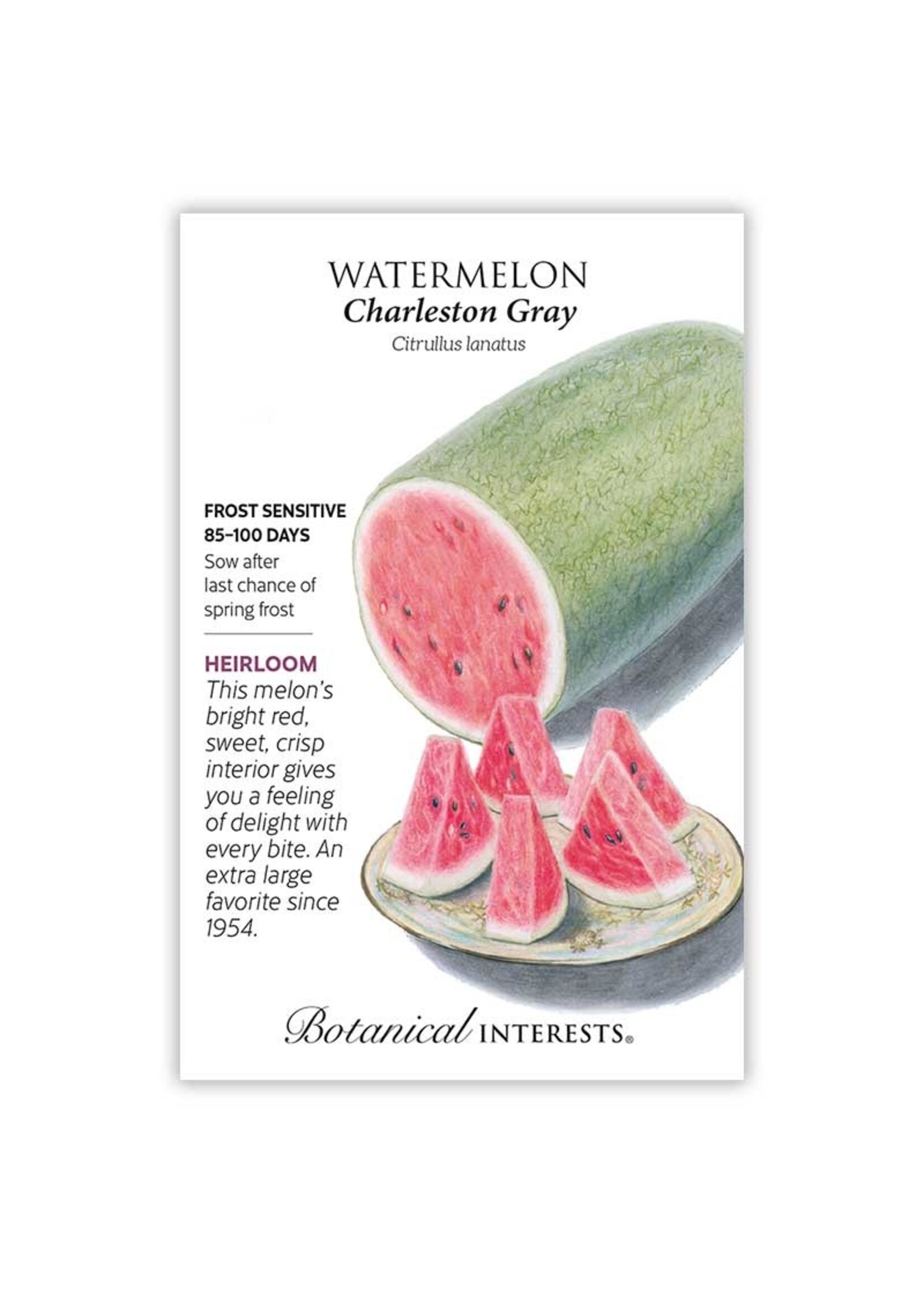
You'll have lots of thick slices for those late summer barbecues and picnics! This open-pollinated melon, developed by renowned watermelon breeder Charles Andrus, of the USDA in Charleston, SC, was the first to be resistant to both Fusarium wilt and anthracnose disease. Greenish-gray rind protects melon from sunburn. It is still affectionately called "that gray melon from Charleston". Fruits average 22"–26" long and 25–35 pounds.
| Coverage | This packet sows up to 20 mounds. |
|---|---|
| Row Spacing | 4'–6' apart |
| Seed Depth | ½" |
| Seed Spacing | 2–3 seeds per mound |
| Thinning | When 3 leaves, thin to 1 plant per mound |
| Germination | 5–10 days |
| Start Indoors | Not recommended except in very short growing seasons, 2 to 4 weeks before transplanting. Roots are sensitive to disturbance; sow in biodegradable pots that can be planted directly into the ground. Transplant when soil temperature is at least 60°F. |
| Direct Sow | RECOMMENDED. 1 to 2 weeks after your average last frost date, and when soil temperature is 70°–90°F. |
| Growing & Harvesting | It can be tricky to know exactly when a watermelon is ripe and ready to pick. First, know the number of "days to harvest" and begin checking fruits as harvest date draws closer. Signs to look for are: (1) the bottom of the melon (where it lies on the soil) turns from light green to a yellowish color; (2) the surface color of the fruit turns dull; (3) the skin becomes resistant to penetration by the thumbnail and is rough to the touch; and (4) light green, curly tendril on the stem near the point of attachment of the melon is brown and dry. All of these indicators may not necessarily occur at the same time. |
